2025 was a complicated year for the EV industry. EV sales fell sharply in Q4, and for those in the charging business, the headlines may have felt unsettling. But vehicle sales and the charging business are telling two very different stories right now. The US added 17% more charging ports, and utilization at existing chargers was up. Electrek reported 141 million charging sessions, a 30% increase over 2024. There are more EVs on the road than ever, and drivers are using public charging stations more often.
So what does this mean for 2026? We took a close look at the rebate and incentive landscape for EV chargers to identify the biggest trends shaping the year ahead.
Here are the trends we are seeing in EV charger rebates for 2026:
- Rebates Remain Strong With Record Coverage
- A Moving Target: Programs Change at Record Pace
- Technical Requirements and Approved Lists Still Prove to Be a Headache
- Federal 30C Tax Credit Deadline Approaches
- NEVI Programs Are Moving Forward, but Risks Remain
Rebates Remain Strong With Record Coverage
Despite EVs losing some of their momentum, rebates for EV chargers didn't follow suit. In fact, quite the opposite. The number of open rebate programs in North America grew by 3% in 2026, and coverage is now at its highest level ever.

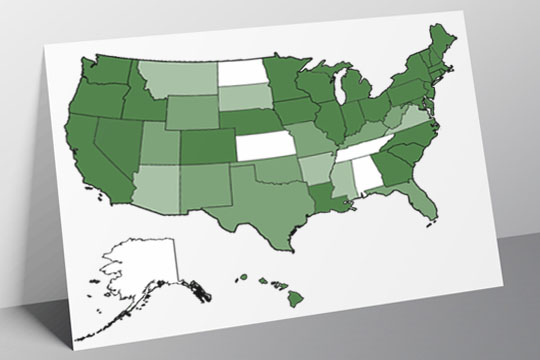
Today, 85% of the US is covered by a rebate or incentive for installing an EV charger, up from 78% at the same point last year. Most of that growth came from expanded coverage for residential EV chargers, while commercial charger coverage remained relatively stable.

Rebate amounts are holding strong as well. The average prescriptive rebate for a Level 2 charger is approximately $600 for residential and $2,560 for commercial installs, essentially flat from last year. For DC fast chargers (DCFC), the average incentive actually increased to $27,014. It's worth noting that this figure excludes NEVI-funded programs, which calculate incentives as a percentage of total project cost and can't be fairly compared on an average-dollar basis.

A Moving Target: Programs Change at Record Pace
While overall rebate availability is at a record high, the landscape is anything but stable. EV charger rebates have always been notoriously volatile, subject to federal policy shifts, changes in state legislation, and funding that can be exhausted quickly when participation is high. That volatility is accelerating.

In 2025, we tracked over 510 program changes throughout the year, a 14% increase over 2024. And less than three months into 2026, we've already recorded 170 changes, putting the year on pace to surpass last year's total.
The types of changes vary widely and can happen at any time. In 2025, some programs cut incentive amounts significantly mid-year, others exhausted their funding and moved to waitlists, and several closed permanently with no replacement. Some programs opened, closed, and reopened multiple times over the course of the year. What's available and how much you can get can look very different from one month to the next.
The takeaway for companies trying to take advantage of these programs: staying current isn't optional. A geography that looks attractive one month may lose funding the next. Businesses that want to maximize rebate opportunities need to monitor programs closely and be prepared to shift their focus as conditions change.
Technical Requirements and Approved Lists Still Prove to Be a Headache
One of the biggest hassles for EVSE manufacturers is the differing standards and technical requirements between all the programs. Unlike commercial lighting, which has the Design Lights Consortium (DLC) as a nearly universal benchmark, or HVAC, which uses established ratings like IEER and SEER, there is no single, widely adopted specification that determines whether an EV charger qualifies for a rebate.
For 2026, 24% of programs in North America have an approved charger list specifying which models qualify, up from 22% last year. In addition, for commercial chargers, 15% of programs have an approved network list specifying which networks the equipment must operate on.

Overall, the market still operates as a patchwork of technical requirements. Programs may reference different versions of OCPP and ISO-15118, have physical card reader requirements, or have specific network or software platform rules. There has been little meaningful standardization in rebate requirements so far in 2026.
Some small progress is worth noting. The EPRI Vetted Products List evaluates EVSE equipment against a common set of criteria and provides a shared eligibility list for participating programs. A few new programs were added over the past year, but it still represents only a small share of the nearly 500 available programs. Similarly, EVCAN launched last year with a managed charging specification intended to simplify eligibility for chargers with managed charging capabilities.
Progress is slow, but the fact that these initiatives exist at all suggests the industry is starting to feel the pressure to standardize.
Federal 30C Tax Credit Deadline Approaches

While the federal tax credit for EV purchases ended early at the close of 2025, the federal 30C tax credit for EV charger installation remains available. The credit had originally been scheduled to remain available through December 31, 2032 but changes in the legislation moved the end date to June 30, 2026.
The credit itself is unchanged: up to 30% of project cost, capped at $1,000 per charger for residential and $100,000 per charger for commercial applications. Geographic restrictions also remain in place, requiring installations to be located in an approved census tract, typically in low-income or rural areas.
The end of the Federal EV tax credit triggered a rush of vehicle purchases at the end of 2025. The question now is whether the same pattern will emerge for EV charger installations. To qualify, chargers must be placed in service by the June 30, 2026 deadline, meaning the window to take advantage is closing fast.
NEVI Programs Are Moving Forward, but Risks Remain
NEVI-funded programs have had a turbulent few years. Originally established under the Biden Administration's Infrastructure Investment and Jobs Act, the program was designed to build out a reliable national DCFC network along major transportation corridors. Progress was slow out of the gate, and just as states were beginning to launch their programs, the current administration froze funding. After legal challenges, the DOT ultimately issued revised guidelines that loosened some requirements, expanded the allowable distance from corridors, and permitted funds to be used off designated routes once a state is considered sufficiently built out.

With that resolution, 42 states submitted and received approved NEVI programs for 2026, a significant rebound.
But a new complication emerged in February. The Federal Highway Administration (FHWA) proposed modifying the Buy America requirements for NEVI-eligible chargers. Currently, chargers qualify if they are assembled in the US and at least 55% of component costs are domestically manufactured. The proposed change would raise that threshold to 100%, a bar that would be almost impossible for current manufacturers to meet in the short term, according to industry leaders. Critically, this is still a proposal. The public comment period closes March 16, 2026, after which the FHWA will determine whether to maintain, modify, or discontinue the existing waiver.
Despite all of this, NEVI-funded installations more than doubled last year. Charging analytics firm Paren reported 99 new NEVI-funded charging stations opened in 2025, double the 2024 figure. And that represents only a fraction of total DCFC installations, reinforcing an important point: DCFC charging isn't solely dependent on NEVI. With a combination of utility rebates, state incentives, and improving utilization rates, DC fast charging is increasingly profitable.
Incentives Will Continue Shaping the EV Charging Market in 2026
Rebate coverage is at an all-time high and dollar amounts remain strong, yet the programs behind those incentives are more volatile and complex than ever. A federal tax credit with a hard expiration date and ongoing uncertainty around NEVI adds further urgency to an already dynamic landscape.
For contractors, distributors, installers, and charge point operators, the opportunity is real, but so is the complexity. Those who stay informed on program changes, understand the technical requirements, and fully utilize these programs will be best positioned to come out ahead. The fundamentals of EV charging infrastructure remain strong. But navigating the incentive landscape effectively will determine which companies capture the opportunity and which leave money on the table.
RebatePro for EV Chargers Can Help You
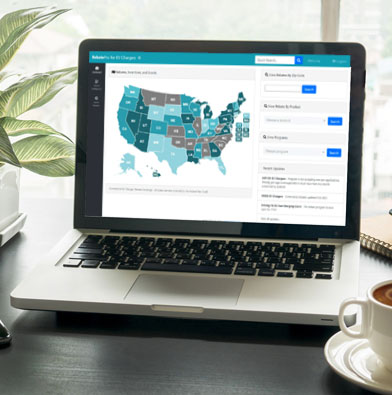
The biggest challenge for EV charger incentives in 2026 will be staying on top of changes. There can easily be hundreds of updates throughout the year, and companies need to be aware of them quickly.
RebatePro for EV Chargers makes it easier to keep up with changing rebate programs and requirements. The platform helps users monitor programs that matter most, track updates, and stay informed on the overall rebate landscape across the country.